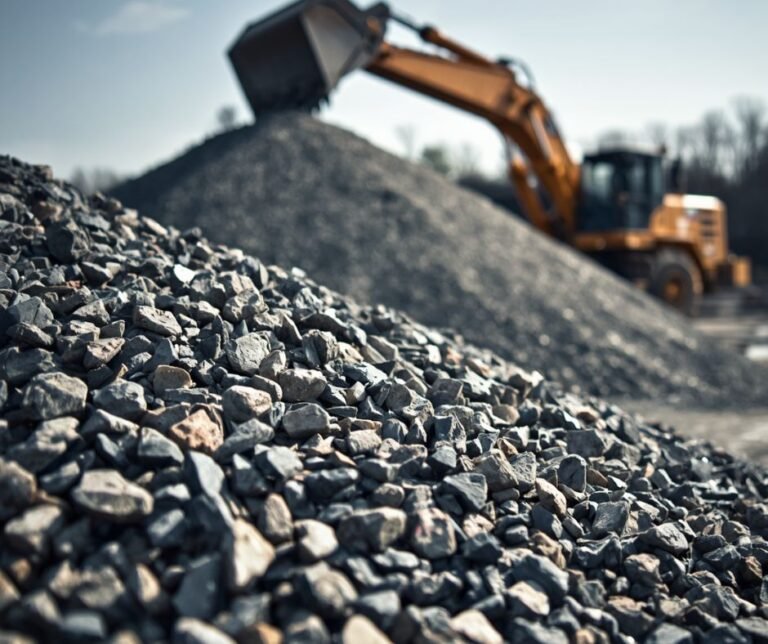
It all starts from the ground up—literally! In our last post, we mentioned the importance of using “high-grade, durable rock.” But what does that actually mean? Let’s break down the science behind the strength.
What is “High-Grade, Durable Rock”?
In the construction world, we don’t just use any stone we find. We use high-quality construction aggregates—mostly sourced from incredibly tough igneous and metamorphic rocks like basalt (often called “blue metal” or crushed black stone) and granite.
To be considered “high-grade,” the rock must pass strict quality tests for:
- High Compressive Strength: The ability to bear massive weight without crushing.
- Low Porosity: It shouldn’t absorb water easily, preventing cracks during weather changes.
- Abrasion Resistance: It resists wearing down over time, making it perfect for heavy traffic.
How is it Processed and Sold?
High-grade rock doesn’t come out of the quarry ready to mix. It goes through a meticulous process of blasting, heavy crushing, and precise industrial screening.
Because different projects require different sizes, aggregates are commonly marketed and sold by gradation (size) and weight:
1. By the Ton or Truckload: For major projects, rock is sold in bulk by metric ton. You’ll see it delivered in massive multi-wheel dump trucks directly to the site.
2. By Specific Sizes (Gravel & Crushed Stone):
- Base Course (Larger 20mm–50mm): Used as a solid foundation layer under roads and structural slabs to prevent the ground from shifting.
- Ready-Mix Aggregates (Smaller 10mm–20mm): Interlocks perfectly with cement and sand to create high-performance concrete.
- Fines & Sand: Used to fill the microscopic gaps, ensuring a dense, airtight finish.
The ASPAN Commitment
From crushed basalt for heavy-duty highways to carefully graded aggregates for solid structural foundations, sourcing the right stone isn’t just a detail—it’s our blueprint for longevity.
When you build with high-grade materials, you aren’t just building for today. You are building a legacy that withstands the environmental demands of tomorrow.